
Travel is full of everyday words
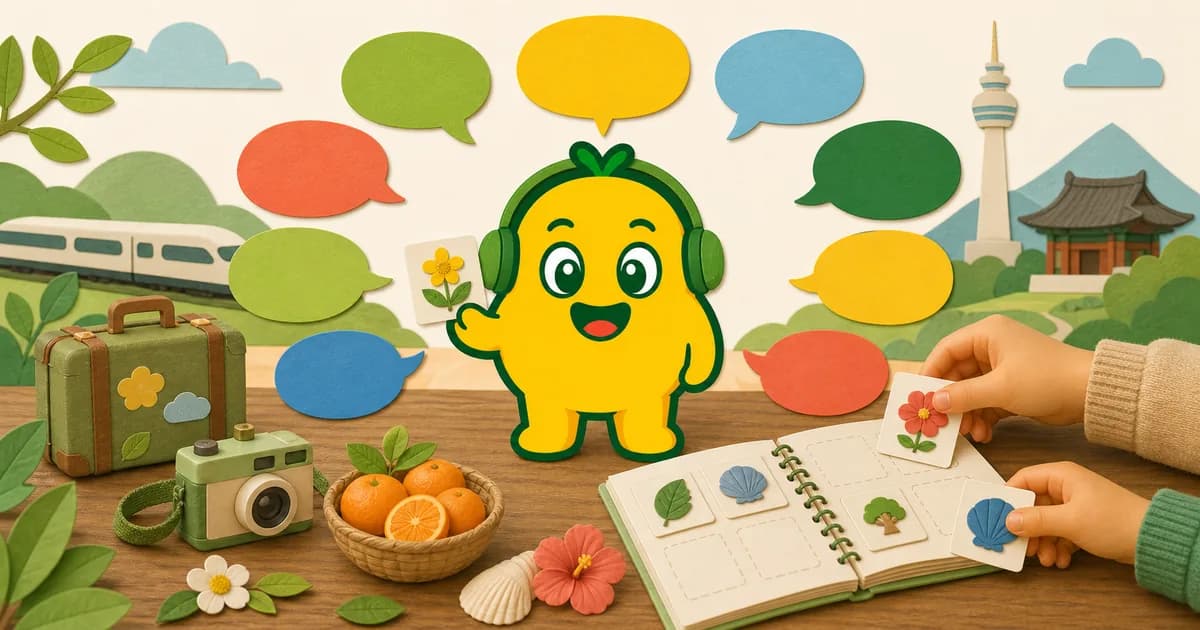
A family trip introduces children to objects they may not notice at home: a different kind of train, a shell on the beach, fruit at a market, or a flower beside a hotel. These small discoveries can become a photo field guide connected to real places and memories.
KORENANI supports labels and read-aloud audio in nine languages: Japanese, English, Spanish, French, German, Italian, Portuguese, Chinese, and Korean. Families can use the same saved discovery with more than one language without turning the entire trip into a formal lesson.
Choose a few discoveries, not everything
Travel already brings new sounds, schedules, and environments. A useful field guide can begin with one or two photos a day. Let your child choose something they genuinely noticed rather than asking them to complete a long list.
Good travel discoveries include:
- A train, bus, suitcase, or ticket machine
- Fruit, bread, tableware, or another everyday item
- A flower, leaf, tree, shell, or stone
- A building shape or piece of street furniture
- A toy or souvenir your family has permission to photograph
Avoid photographing identifiable people without permission, restricted areas, private documents, room numbers, tickets with personal details, or security equipment.
A simple multilingual routine
1. Talk about the discovery first
Ask where your child found it and what made it interesting. The photo should preserve the moment, not interrupt it.
2. Take one clear photo
Keep one main subject in the frame and stay aware of local rules, traffic, crowds, and property. Never stop in an unsafe place for a photo.
3. Choose General, Plant, or Insect mode
Use General for travel objects and transport, Plant for flowers and leaves, and Insect for insects. Recognition may be incorrect, so do not use it for food, health, or safety decisions.
4. Listen in one familiar and one new language
Begin with the language your child understands best. If they remain interested, switch to one other language and listen again. The goal is exposure to a sound connected with a real photo—not testing pronunciation or memorization.
5. Save selected photos to a child-specific collection
KORENANI supports separate child profiles, with up to four profiles under one parent account. Save only the discoveries your family wants to revisit, then arrange them into an album for the trip.
Ideas for revisiting the trip at home
| Activity | Prompt |
|---|---|
| Photo order | Which discovery came first? |
| Sound match | Can we find the photo that matches the spoken label? |
| Place memory | Where did we see this? |
| Compare | Did we see something similar near home? |
| Choose a language | Which language would you like to hear next? |
Saved discoveries can later support text or audio quizzes when enough different items have collected. Keep the activity optional and short; the photos can also remain a simple family album.
Keep language claims realistic
Listening to labels can create moments of language exposure, but one trip or one app does not guarantee fluency, vocabulary growth, or memory outcomes. Follow your child's interest and use the audio as one part of the conversation.
Read Multilingual Text-to-Speech for Kids' Learning for the supported-language overview.
Before the trip
- Confirm camera and photo permissions with the parent account.
- Check the latest plan limits and next renewal date in the app.
- Agree on when photography is and is not appropriate.
- Keep a parent or guardian involved in camera use and external links.
- Do not assume recognition or audio will replace local signs, guides, or safety instructions.
Read next
For a closer-to-home version, read Turn a Family Walk into a Personal Field Guide. To organize the photos later, continue with Use Collections and Quizzes to Revisit Discoveries.