
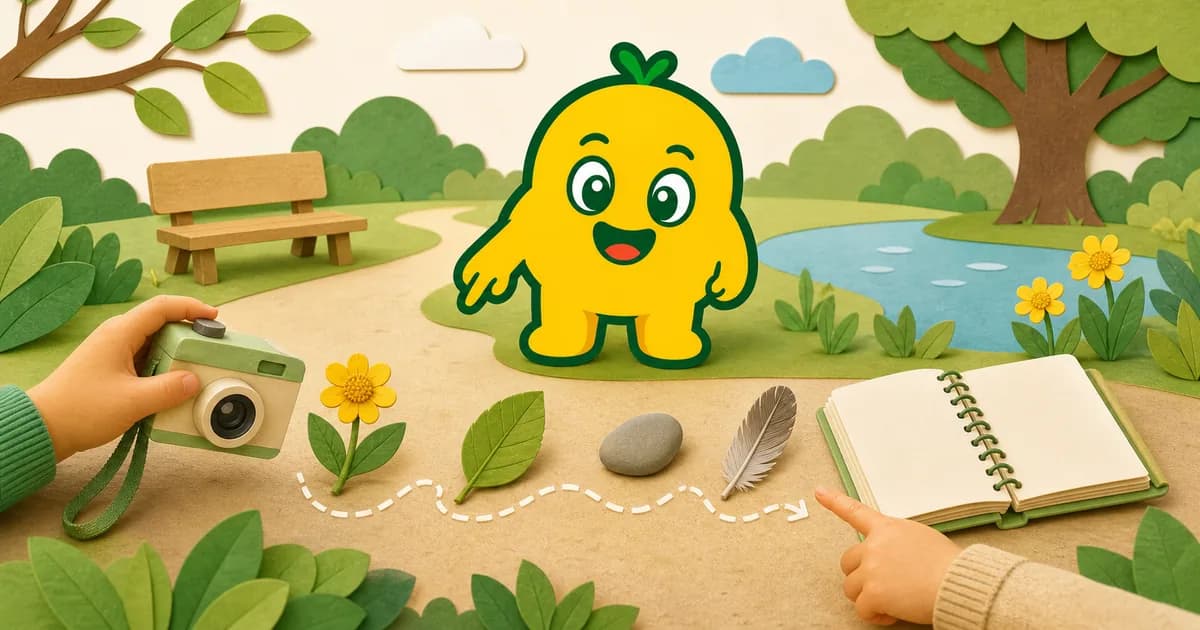
Start with one small discovery
A family walk does not need a worksheet or a long list of things to find. One flower beside the path, a bus at the corner, or a leaf with an unusual shape can be enough. The goal is to notice something together and give your child time to ask, “What is that?”
KORENANI can help turn that moment into a photo your family can listen to, save, and revisit. It is best used with a parent or guardian, especially near roads, water, unfamiliar plants, or insects.
A simple walk-to-field-guide routine
1. Let your child choose what to notice
Instead of naming everything first, pause and let your child point. Useful prompts include:
- What caught your eye?
- What color or shape do you see?
- Does it move, grow, or stay still?
- Have we seen something like it before?
These questions make the discovery itself the focus. The app supports the conversation rather than replacing it.
2. Take one clear photo
Move close enough for the subject to be easy to see, but keep the whole object inside the frame. Try to avoid busy backgrounds and strong backlighting. For a moving subject, take the photo only when it is safe to stop.
For more practical examples, see How to Take Clearer Photos for Image Recognition.
3. Choose the matching recognition mode
Use General for vehicles, signs, benches, toys, and other everyday objects. Choose Plant for flowers, leaves, and trees, or Insect for insects. Results can be incorrect, so treat the answer as a starting point for conversation rather than a safety, food, or medical decision.
Compare the three recognition modes before your next walk.
4. Listen in a language that interests your family
KORENANI supports display and read-aloud audio in nine languages. You might listen once in the language your child already knows, then try another language. There is no need to turn every discovery into a lesson; one word repeated naturally is enough for the moment.
5. Save only the discoveries you want to revisit
Saved photos and results can become part of a child-specific collection. At home, look through the collection and ask what your child remembers about the place, color, sound, or shape. When enough discoveries have collected, they can also become material for later text or audio quizzes.
Good places to begin
| Place | Easy discoveries | Suggested mode |
|---|---|---|
| Neighborhood street | Vehicles, buildings, mailboxes | General |
| Park | Benches, play equipment, insects | General or Insect |
| Garden | Flowers, leaves, trees | Plant |
| Station or travel stop | Trains, signs, everyday objects | General |
Keep the route familiar at first. A short repeatable walk makes it easier to notice seasonal changes without needing to collect a large number of photos.
Keep observation safe and respectful
- Stay with your child and follow local rules.
- Do not touch or taste an unfamiliar plant or insect based on an image result.
- Avoid photographing identifiable people without permission.
- Observe insects without trapping or handling them.
- Stop only where it is safe to use the camera.
The finished field guide matters less than the shared habit of noticing. Today’s flower, bus, or feather can remain one small page in a collection your family made together.
Read next
Continue with How Kids Can Learn Object Names from Photos or plan a trip with A Multilingual Travel Field Guide for Kids.